Race and the Aliites
Podcast with Spencer Dew (1 March 2021).
Interviewed by David McConeghy
Transcribed by Andie Alexander
Audio and transcript available at: https://www.religiousstudiesproject.com/podcast/race-and-the-aliites/
KEYWORDS
Race, American religion, New Religious Movements
David McConeghy (DM) 00:05
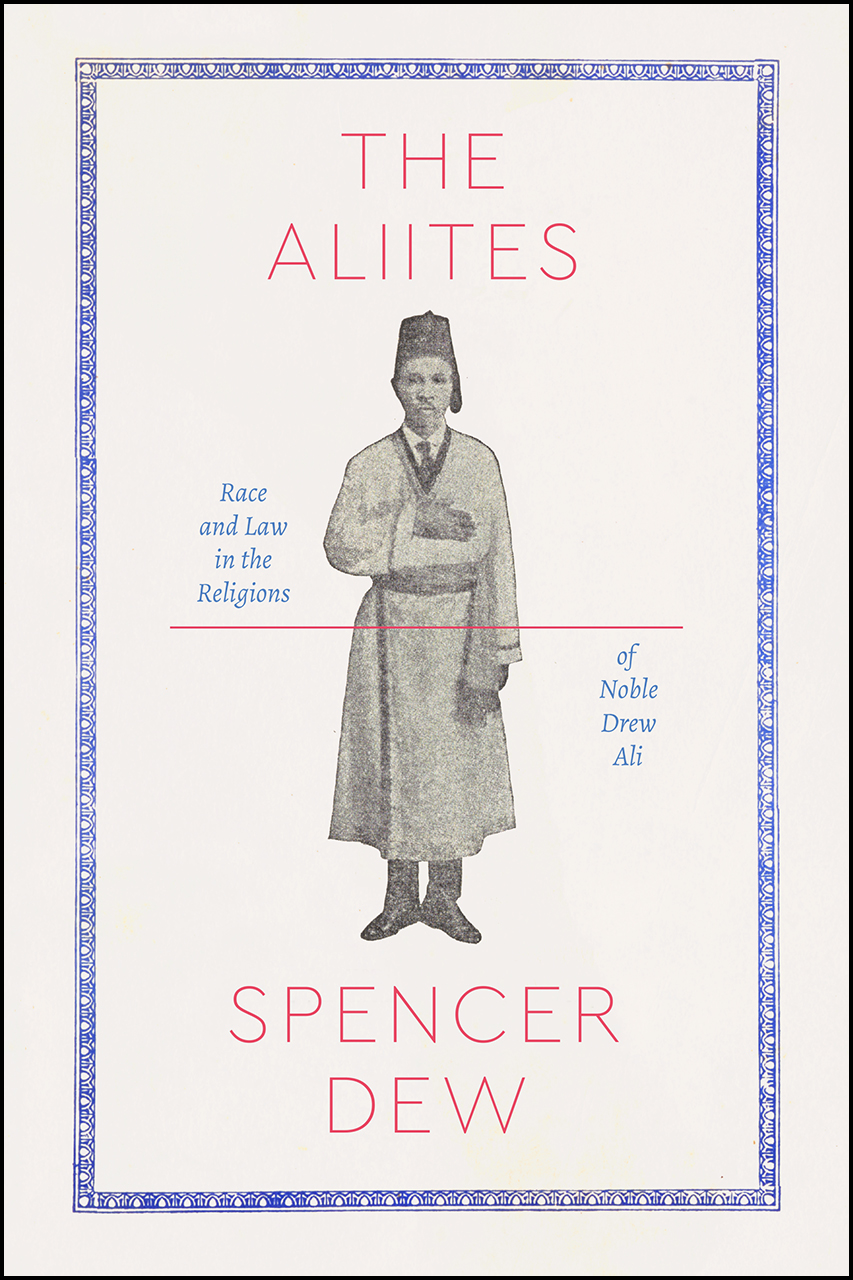
My name is David McConeghy, and today I’m delighted to be joined by Dr. Spencer Dew, a religion Teaching Fellow at Wittenberg University and affiliated faculty in religion at The Ohio State University. He’s the author of several books, the most recent of which is The Aliites: Race and Law in the Religions of Noble Drew Ali, winner of the 2020 Albert J. Raboteau prize for best book and Africana religions from the Journal of Africana Religions. It’s our great pleasure to welcome you to The Religious Studies Project.
Spencer Dew (SD) 00:39
Thanks so much for having me. I love this project. I love this podcast. I’m thrilled to be here.
DM 00:44
Oh, well, thank you. I find that sometimes the Americanness of what I work on is hard for our European and Australian and Asian counterparts to grasp, the Aliites might be a movement that is unfamiliar to those outside of the United States. Can you talk a little bit about Noble Drew Ali and the history of the related movements that you describe as the Aliites?
SD 01:13
Absolutely. And I think it’s safe to say that there is a resolute Americanness to the claims here and to what gets structured as religion. So Noble Drew Ali is an African-American political and religious thinker, innovator, acted in the 1920s. There’s some mystery and contested claims about his past, and when you get started with this religious work—but I think we know—fairly sure we know—for sure that in 1925, he moves to Chicago, and there he starts an organization that is eventually named the Moorish Science Temple of America. America is right there in the name. It is a movement that uses the language of Islam, that uses the language of the fraternal societies—by language I mean both the garb and the lingo—but in a radically new and creative way, right. So, he has a book called the Holy Quran. This is different than the Arabic Quran, and he’s quite straightforward about that. It has precursors in other American religious movements, new thought, et cetera. But he starts this movement on the basic claim that folks who are identified as Negro, Black, Colored—he also says Ethiopian, which has its own history in America at the time—folks who were identified as Negro, Black, Colored, or Ethiopian are not those things. They are, in fact, he says Moorish. And therefore, if they recognize that Moorish identity, they are Moorish-Americans. So here we get the first level of this really resolute Americanness to it. There’s a way in which I argue in the book, his model looks very much like an immigrant model and immigrant assimilationist model that surely you saw all around him in Chicago, right, where you get these neighborhoods of folks who have their own flag, they have their own newspaper, they have their own way of dress, they have their own food ways. But they say we’re completely American, right? We’re Swedish-American, we’re, etc. He says Moorish-American works the same way. Right? So, recognize our flag, recognize our nationality, we can then be assimilated as full citizens into the American project, be full participants.
SD 03:57
This is in contrast to that list of what he calls nicknames, legal fictions, like Negro. Negro is, really, I think, the most important and it’s the one that I deal the most time with in the book, because it is the one that is most clearly flagged in American history as a legal fiction, right. We have lots of jurisprudence on “Negro” as a category—Dred Scott probably being the most famous American Supreme Court decision that said negros cannot be citizens. That for Ali, and for the various religious communities that emerged from his thought, is absolute proof of this idea that if you call yourself Negro, you can never be an American. So, you need to call yourself something else, and he offers this thing. Again, it comes marked in its own idiom. There’s a Moorish flag, there’s a Moorish way of dressing—men wearing fezzes in particular, like men and fraternal societies—which means already, like a certain elite strata of men already had been wearing in a lot of very public contexts in Chicago, right? This wasn’t an abnormal way of dressing, let’s say. This was a way of dressing that I think we need to recognize is already coded as being part of vested in citizenship and power. Aliites today love to post photographs of various former presidents and mayors and even FBI officials wearing fezzes, right, because a lot of these folks are in these fraternal societies where they wear fezzes. So, the fez had that kind of power. And it also marked them as distinctly other, right—as foreign, I guess you could say, but as foreign in a way that is assimilated. It is a separate nationality. Ali says it’s not a race. He says all humans are the same race. But humans are in different nationalities. And as soon as they admit, recognize, and own their nationalities, then they can be fully vested in American citizenship.
SD 06:04
So that’s a very, very quick summary of Ali’s career. You know, he only had, I guess, four years in Chicago, this organization quickly became a national organization. He did various tours, both throughout the sort of predictable urban centers of the north, where you would expect new religious movement like this to take off in African-American communities, but also the south, there was an important community in Louisville, Kentucky, some important communities Arkansas, and folks were being drawn from deeper south as part of the Great Migration to join these communities in the north. Then he dies in 1929, the Moorish Science Temple of America movement fragments. It was already in the process of fragmenting before his death, but with his death, then there are deep divisions that continue to the present day in certain communities. And in the book, I look not only at the very, very wide and diverse range of folks who identify as Moorish Science Temple of America, I also look at two other, I think, equally diverse movements, the Washitaw de Dugdahmoundyah, which is a movement that started in Louisiana in the 1980s predicated on the claim that the folks who are Washitaw are— they’re not black—and most importantly, that they are the direct descendants of the original settlers of the New World—the mound builders, the Dugduhmoundyah, is literally who they are, right? We are the ones who built the mounds. Poverty Point in Pioneer, Louisiana being the most symbolically important. But again, this is now a diverse nationwide group. They do certain rituals and mounds; they talk about mounds as important to their claim as being indigenous folks. And then the third group is the Nuwaubian Yamassee, also known earlier… known as the Ansaru Allah Community. Michael Muhammad Knight just has this fantastic book on the history of this movement, just released that y’all should read and do a podcast on. I focus, I think, I focus mainly on the Tama-Re period in Georgia, which is what Michael Mohammed Knight calls the post-Islamic period—he’s got his own meaning behind that term—but that is the period where this discourse, this Aliite discourse about citizenship to me seems most important. And again, Ali is presented throughout the history of that movement as an important, forbear or harbinger.
DM 08:56
I think what’s striking to me is the number of different kind of layers of the arguments that we hear. So, I know that Noble Drew Ali’s—one of his main messages that’s picked up and echoed throughout your work is unpacking the meaning of a phrase like “citizenship as salvation,” because it’s predicated on very particular understandings of what citizenship means, of the racial configuration of citizenship, of the nationalizing of citizenship, which is a very fascinating counterpoint to me, but also, that it entails legal obligations, it entails religious obligations. And all of these things are layered into something that I think for a lot of religious communities is entirely a secondary construct—that citizenship, for them, is, if not invisible, at least a second order category. And to be confronted with the Aliites placing citizenship as the as the center point of their understanding of what it means to be American, what it means to be Moorish, what it means to be—to understand the sovereignty of their own person and their configuration, I’m just continually amazed at the layers that that are there. When you first came to the project, did you expect that that’s something, you know, that seems as straightforward as “citizenship as salvation”? Did you expect all those layers to follow along behind it?
SD 10:57
Oh, gee… No…? (laughs)
DM 11:00
(laughs)
SD 11:02
I mean, look, the story of how I first came to this project is that the week that I got my PhD, I started, what became six summers worth of adjunct teaching for one of the Chicago Police Department BA programs, right? So, working cops—and in like two cases, firefighters—working cops could, at the end of their shift, come to the police academy and do night classes to work for a BA, which at the time, I think was required for certain promotion within the department. And then there was a graduate MBA program, if you wanted to do something after being a cop, which was always foremost I think in the students minds. So long story short, I was introduced to the Moorish Science Temple of America community through my students that first summer teaching Chicago cops, and I was introduced to them very much in the model of “bad religion,” criminalized religion, right. These are problematic folk who make false claims about their rights, right? They speak legalese in order to accomplish certain selfish arguments, let’s say—that sounds a little bit cynical. I should also say police always encountered sort of… Police don’t spend a lot of time in countering religious communities that are invested in good citizenship, let’s say.
DM 12:45
Yeah.
SD 12:45
Right? So, they were constructing their narrative off of their own policing experiences, which are, you know, whatever they are. I think they also had some very specific biases. And I think, very importantly, I can give a shout out to another book I’ve been thinking about lately. Garrett Felber’s, Those Who Know Don’t Say, UNC press, which is—I don’t know when this will be aired—but UNC press just made it free online because Professor Felber was just fired from Ole Miss for his—
DM 13:19
Right.
SD 13:19
—his political commitments. Anyway, that book is a fantastic book. And one of the things that that book does best is it shows that that folks who are police and prison officials, as well as policymakers, are getting their ideas about religion and whether it’s good and bad from specific sources. One of the sources he focuses on is the Southern Poverty Law Center. That’s one of the sources I focus on in my book as well. And when I was teaching Chicago police, my students would often come up and give me dog eared copies of the Southern Poverty Law Center intelligence report, their glossy magazine, which laid out you know, these religious movements are bad, these religious movements are criminals. And that’s an important thing for us to wrestle with in religious studies. So that is a long-winded answer to your question. But yes, that’s how I was introduced to the movement. So no, I didn’t expect there to be any of this sort of depth. And I think I pursued it with a, yeah, with a profound naivete.
DM 14:24
I’m struck, though, that all of the things that I will remember from your book: the work that goes in to what you call knowledge practices, right? The work that goes into sustaining the arguments about “citizenship as salvation.” I can see how those moves would have been affronting the police officers in Chicago, right. That to have encountered an Aliite community member there, who was claiming that they were an American citizen, and therefore, according to certain treaties that they were citing that they were entitled to certain rights. Like, can you imagine, you know, beat cop trying to, you know, deal with a situation and suddenly being put on the spot as a representative of the state, a representative of the legal institute that, you know, is… I am just… It’s so profoundly creative, but also, it’s so disruptive, right, in that creative way.
SD 15:39
Yeah, I found this fascinating from the get-go, too, right, because the students would also tell stories that hit on precisely that valence, right? I mean, that they were pretty sure that these folks were wrong, and whatever other sort of derogatory term you want to throw at them. But these are folks who behave as experts in the law, right, who, as you say, have in fact spent years becoming experts in the law. Now, judges and police could parse out whether that law maps on to the American legal—that’s a divide that I use us here in the book, but yeah, a great deal of energy and attention and then remarkable skill has gone into this. Maybe I should circle back to—there was an earlier question before the question about how I got into this. Maybe it was less a question and more just a comment from you about citizenship is usually a second order category. Right? But this is not something you say that religions, that religious movements obsess over. I think it’s important, and this maybe goes back also to speaking to European and Australian and South American—the global audience for this podcast—this is a religious movement that emerges from a conflation of some very specific American trends. One is the anti-Black racist, right? This is a movement that is trying to deal with the deep and ongoing history of anti-black racism, the objectification, that the dehumanization of black-skinned folk, but it’s also a movement—and this is where it gets its fire, if you will—it’s also a movement that, in responding to the situation of anti-Black racism in America, in responding to a history in which the American legal and political system has been unequal and unjust, it insists upon certain founding ideals of the American experiment. So, it’s not just dealing with the negative, it’s, well, it’s dealing with two negatives, it’s dealing with the anti-Black situation, and it’s dealing with the fact that as Ali and Aliite thinkers up until now, insist America isn’t fulfilling its promise, America isn’t being America. Now, maybe that sounds sort of loose and ethereal, but it’s mapped by Aliite thinkers, on to some very specific things. The legal system, for instance, does not reflect the law, right. So Aliites talk about the law in terms of natural law, in terms of divine law, in terms of in terms of God, God’s self, like a law is all law. That law is not the law that is handled by the legal system, right. But Aliite thinkers say that law is also natural to us, inherent in us, right? So, there’s a metaphysics of law that say, even though the judge, who runs this corrupt and unjust legal system is just sending black and brown people to prison and doesn’t know the law, something inside his heart inside his body actually is primed to know the law, and therefore there’s a convertibility. That’s not necessarily an Aliite term, but there’s a way in which knowledge of the true law can reach folk.
SD 19:40
So that puts a, you know—why is citizenship not a second order category? Well, for a slew of reasons having to do with these two problematics that America is not a place of equality and freedom and that Black folk are particularly stigmatized and stripped of even legal standing. So, there’s a respectability politics to it, right? The movement is also about, you know, being good citizenship, performing good citizenship in certain ways. There’s a critique of the current political system. There’s a real belief in stuff like popular sovereignty and in the idea that you can go to the courthouse and get justice. And there’s a—and I struggle with this a little because there’s something, I think, a little politically retrograde about this—there’s also a very American, maybe very neoliberal, sense of assigning responsibility back to the individual. So Noble Drew Ali said, “We’re responsible for slavery.” Right, that those who were enslaved were responsible for slavery because they forgot who they were. That’s a hell of a claim, I think. That’s a claim that maybe was, I mean, we’ve also got to remember that Noble Drew Ali was not just speaking to potentially Moorish audiences, or to Moorish audiences, he was also trying to speak to white audiences and audiences that represented real political power in Chicago, where he was, you know, jockeying for political power himself. So, I wonder if some of these formulations were designed to appease racist folk outside the community? But it also has this effect of really motivating that primary importance of citizenship and the work of citizenship, because if you’re responsible for your own social situation, if you’re responsible for all of the problems that might befall you, well, then you better start hustling, you better change it. And I think that kind of—I don’t know, if that’s self-help, I don’t know what sort of words to use there. But that putting the burden back on the self and on the community, that’s really been an essential engine throughout Aliite history as well.
DM 22:18
It strikes me—and maybe this is just my reading—as hugely individualistic. That it says to each of us, there is work because of the affiliations or relations that you have, but you have to do that work. Right? We can’t necessarily do that work for you. We can tell you the frame of the work, we can tell you the structure of work, we can tell you who that work must be directed at, but at the end, only you can stand up and do that work.
SD 22:51
That’s really interesting, because there’s a—I’m tempted to say tension—but I think the harder truth is that there’s not a tension between that radical individual responsibility and a sense of communal commitment. Maybe it is a tension, because I guess I could frame it another way, again, for our non-American audience, but let’s say for our American audience as well, this is a real paradox and problem in American history. In America, we the people, we the individual citizens are supposed to be the sovereign. Right? Which is a tall order to put it mildly. But also, I mean, if we’re going to function as something like a country, we need to have some sense of communal responsibility. COVID has not revealed us to be particularly attuned to communal responsibility. But you’re right, in Aliite practice there is, particularly on the level of knowledge practice and epistemology, this sense of you’ve got to figure it out on your own, right. Aliite thinker after Aliite thinker says, you’ve got to do your own research, right? You don’t you don’t go to temple and hear the truth and just convert. You’ve got to figure it out. And so that’s radically individual. But also, if you’re not looking out for the community and don’t have a sense of responsibility for the community, I think plenty of folks would say both for the community and for the nation—I mean, both for the Moorish nation and the nation-state of the United States—and you’re not, then you’re not doing it right. You’re not fulfilling your responsibilities. This “citizenship as salvation,” this quote that you mentioned, it’s also a responsibility, right, that you have to do this work called citizenship, which is, you know, voting—there’s plenty of Aliite thinkers that say you have to vote, you have a responsibility to vote, we have to bring about this transformation so that the United States of America becomes what it was or what it could be. It becomes this place aligned with God’s law as opposed to this corrupt, inadequate, unjust place.
DM 25:11
I’m most challenged in your work—and this is perhaps a personal theoretical failing, on my part, in my training—by these issues of sovereignty that are being claimed by the Aliites, that we must interact with the state on the state’s terms. And that by presenting ourselves in a recognized forum, in the language that the state recognizes, even if it rejects it, that that elevates our position, it gives us the authority, gives us the power, gives us the right to be fully American in that context. That was hugely challenging for me because, as someone who’s maybe watching the interaction between an Aliite and a judge, if the Aliite says, “Well, I’m going to cite X and Y treaty from the past,” and the judge says, “Those treaties are not relevant here. I reject your claim and dismiss your suit.” From my perspective, right, it’s really challenging to understand what kind of victory that claimant had, right? From the legal perspective, it feels like a loss, but yet they present it as a win. And sovereignty you say is at the heart of why they see that as a win and not a loss. Can you explain a little bit more about that?
SD 26:48
Yes. So, the first thing to say is that this notion of sovereignty is—oh, you know, I said some things earlier were problematic in terms of American history. Yeah, there’s some problematics in American history that are sometimes productive, sometimes extraordinarily destructive. But sovereignty, sovereignty, I think, is not a useful concept. I think sovereignty is… Well, let’s frame it in American terms, right. So, in America, we have this notion of popular sovereignty, right? The sovereignty of “we the people,” the sovereignty of the citizen. There are times that this is certainly inspirational and seems promising. I think the notion of sovereignty itself becomes a kind of trap. It’s… how do we achieve what it in fact promises? So, we don’t need to get into [Carl] Schmidt and [Giorgio] Agamben to recognize that sovereignty is this model of a kind of absolute power derived from certain theological teachings. Sure, I guess it’s manifest by despots and tyrants and monarchs and dictators. Whether that’s a useful term to talk about Supreme Court decisions, or elected representatives, let alone “We the People,” it seems—again, I’m using kind of cheap language here—but it seems problematic. So, let’s get into the specific examples you cite. What does it mean for an Aliite to go in front of a judge in a courtroom, make an argument, cite legal precedent, and not win, right? I mean, I’m really, really interested in—it’s important for us as scholars of religion, it’s important for us as people who think about humans, to realize that the sort of exchanges that happen on the street and in the courthouse, that there’s more to them. That, right, they’re not a football game. It’s not just—I mean, a football game isn’t like this, either—it’s not just win or lose, right? So/ the charge can be dismissed, you can be sent to prison, but you can still feel that you’ve accomplished something. Now, one language that’s popularly used to talk about what here is accomplished is a sense of sovereignty, that one has stood one square and exercised one sovereignty. That experiential sovereignty is obviously very different than the sort of absolute power that someone like a dictator might have.
SD 29:57
I guess that’s where I want to locate real exploration of the problematics of sovereignty. This is something I’m trying to work on at present. At the AAR [American Academy of Religion] that happened fairly recently, I talked about COVID public policy mandate protesters, right. Folks who were rallying against the quote unquote, tyranny of having to wear masks. And again, it’s the same problematic at play, right? These are folks who, I think, fellow citizens who, like us believe that the citizen is supposed to be sovereign—“We the people”—we’re supposed to make decisions around here. And in certain spectacular instances, whether that’s public protest, or whether that’s acts of refusal, right—walk into the Piggly Wiggly without your mask—or whether that’s acts of an epistemological or hermeneutic work, right—figure out the latest Q drop—one can experience this sense of sovereignty. But that experiential moment, among other things, it’s just a moment, and it’s just fleeting, and then it leaves you. At the AAR, I compared this with William S. Burroughs’s discussions and theorization of heroin addiction, right. He uses heroin addiction to talk about society of controlling. He says heroin addiction is all about, it’s all about highs and sickness, right. You do a shot, and you experience that thing, which is that momentary experience of sovereignty. I’m standing in the, in the street, maybe by myself, maybe with colleagues yelling out about mask mandates, but then, then that moment is over. And I’m not a sovereign. Maybe the other way to say this as a scholar of religion is that this notion of sovereignty then also becomes one of these engines that really drives religious practice and religious thought. It’s something we want, it’s something, I think, we desperately need. And again, I’m speaking in an American context where it’s been really enshrined and canonized and taught on, but I suspect there’s analogs elsewhere, as well.
DM 32:22
I wonder, as we wrap up, about some of the ways in which we have an opportunity in the future to think about the lenses that were not used in the book, or maybe some of the language choices that were not used. So, you focus on sovereignty. And while you were speaking about it, I wondered why autonomy was not a more central kind of language to talk about it. Similarly, your work on identity in the racial, national components of how they see citizenship, I wondered whether the politics of respectability meant that class was a much bigger issue in these communities, and that the right to defend oneself pro se in the legal system wasn’t in some senses a rejection of the kind of class elements of participating in the legal system. So, if you were to tell the audience and tell your future self perhaps, what would be the next set of lenses that you would want to apply to this that would help you move the discussion of the way in which these categories are really foundational? What comes next?
SD 33:50
Wow, that’s a really interesting question. I mean, obviously, sovereignty is here, a native category, right? So, one reason that there’s so much attention to sovereignty is that this is the term that’s used. Class matters in some complicated ways, in that Ali’s teaching is also I think, both aspirational and oh—what’s the language here—he doesn’t challenge class divisions in a way that I find worthy of… No, right. His eschatological vision is that the rich and the poor will lay down together in harmony, which is very different than then no longer having those categories of rich and poor.
DM 34:45
This is the lion and the lamb image.
SD 34:49
Yeah. Well, but where would I want to go further with this kind of stuff? I’m particularly interested in biopower. And one thing that I don’t think I explored—this is where I got to the COVID protesters. Actually, one thing I didn’t explore in this book or didn’t think sufficiently about is… A few minutes ago, I said there’s this idea that the judge—even if the judge is unjust and doesn’t know the law—the judge can know the law because somehow God’s law is etched in the judge’s heart. In a lot of Aliite thought, it’s not just etched in the heart, which is a poetic turn of phrase, it’s literally in the cells of the body, right, that we acquire, not just knowledge of law, but also a category called legal immunity, through our mother’s milk, it flows in our veins. And just as our true identity can be corrupted by our conscious acceptance of legal fictions—if I think I’m a Negro suddenly, I’m not who I am. Likewise, if foreign substances are injected into our body, right. So, and this is, obviously, this is not all Aliites, but there is some, I think, complex and very, very interesting, Aliite discourse on vaccines, that treats seriously this idea that the body is itself a product of God and therefore at one with law, and that one needs to be very cautious about foreign interference, whether it’s conceptual or physical. Yeah, that’s one lens? I don’t know.
DM 36:35
Yeah, no, that’s great.
SD 36:35
I don’t know if that’s a sufficient answer.
DM 36:37
What I was thinking about in the turn to biopolitics—and I do have a digital copy of a book, so I just did a quick Ctrl+F “Foucault.” Nowhere in the mix. And I wonder if those larger, genealogical biopolitical elements really have a place. The thing that it most reminded me of is, in my own COVID distractions, I’ve been doing more literary reading, and I read The Marrow Thieves, by Cherie Dimaline, which is about indigenous native peoples being hunted for the genetic information in their bone marrow. And I think there’s a rising moment of recognition—you know, genealogy.com and heritage.com and these… what is it, 99andMe, where you can get your genetic markers done. I think these…
SD 37:39
(laughs)
DM 37:40
Say that again?
SD 37:41
I thought it was only 23.
DM 37:43
Oh, 23.
SD 37:44
But I’m bad at math.
DM 37:44
I probably have embarrassed myself there. (laughs) But I think that’s a rising moment. Science is now able to make claims about some of those ethnic and national and racial, potentially, origins that are that complex configuration of abstract and genetic fact, that are all imbued there. And we’re now seeing a lot of literature from indigenous and Native American communities. And I’m hearing from you from inventive Black American traditions as well, that are tackling that next biopolitical kind of move. That sounds fascinating to me.
SD 38:30
That—to return to your other question—that’s wrapped in class too. So, among Aliite thinkers, there is great suspicion about the DNA industry. And I think rightly so. I mean, they’re aware that these are big corporations with small data sets and there’s something… Yeah, there’s a number of reasons to be suspicious about the process and the product there. And there, I think we’re getting some very, very interesting thought and critical reflection.
DM 39:06
Yeah. If you could recommend to other teachers who might like to use your work on the Aliites, what would you be recommending as a final kind of send-off to us today? Which part do you think is the most accessible for perhaps the advanced undergraduate class to use?
SD 39:33
Boy, that’s an interesting question. I would like to think that the chapters stand alone nicely. I mean, I think that chapter one sort of sets out some basics, but—long as you’re asking me—I mean, to me, I think that the piece that I would be most interested in teaching undergrads, if I hadn’t written it because that makes it sort of awkward, would be the introduction right—I’m sorry, the preface, which is very brief, but offers a real glimpse of the Washitaw community—a Washitaw community—in just sort of standard exchange, right. It’s not fancy theorizing. It’s just folks talking through their religious frame, their social frame. I think that’s the sort of stuff that I—as I, oy, plan for a semester that’s about to start far too soon—that’s the sort of stuff I’m most interested in really getting students to pay attention to and analyze—maybe analyze sounds a little to clinical—but I want them to pay attention to human moments, recognize the human stakes. That I think is the job, and material that does that is the material that we should be most interested in.
DM 41:19
Well, that’s wonderful. Well, thank you, Dr. Dew, so much for joining us today. We really appreciate your time. And I’m really thankful for this contribution that had me thinking about citizenship and sovereignty and the Aliites in totally new ways, and I’m very appreciative for your work.
SD 41:36
Thank you. It was great. Great being here.
Citation Info:
Dew, Spencer and David McConeghy. 2021. “Race and the Aliites”, The Religious Studies Project. Podcast Transcript. 1 March 2021. Transcribed by Andie Alexander. Version 1.1, 1 March 2021. Available at: https://www.religiousstudiesproject.com/podcast/race-and-the-aliites/
Transcript corrections can be submitted to editors@religiousstudiesproject.com. To support the productions of transcripts, please visit http://patreon.com/projectRS/.
This work is licensed under a Creative Commons Attribution- NonCommercial- NoDerivs 3.0 Unported License. The views expressed in podcasts are the views of the individual contributors, and do not necessarily reflect the views of THE RELIGIOUS STUDIES PROJECT or its sponsors.